
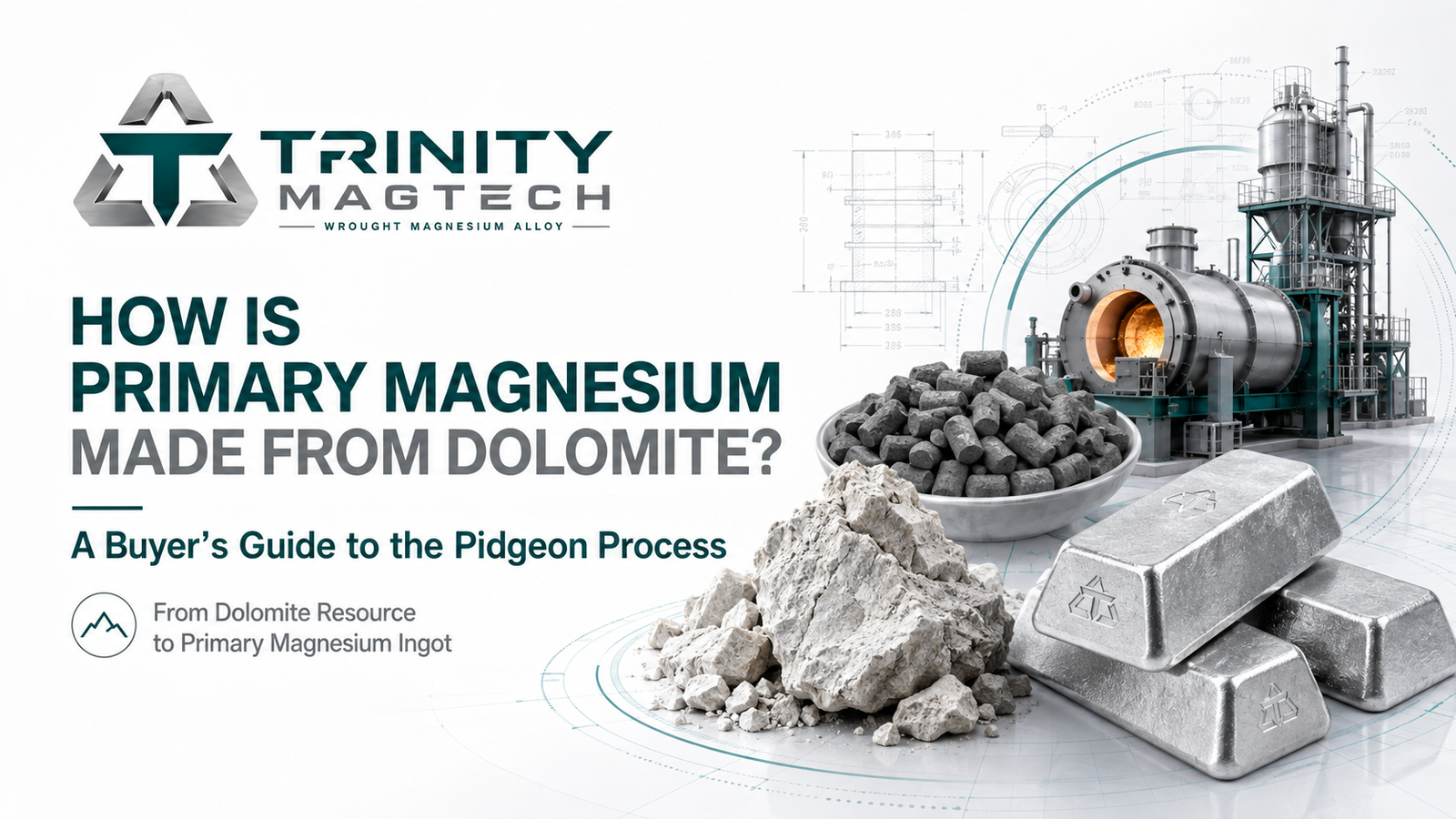
A Buyer’s Guide to the Pidgeon Process
| Before you start talking about furnaces, equipment or plant size, there is a more basic question to answer first: Is your dolomite actually suitable for stable magnesium production? |
The Pidgeon process is often explained as a simple chain: calcine dolomite, mix it with ferrosilicon, reduce it under vacuum, condense magnesium vapor, refine the crude magnesium, and cast it into ingots.
As a simplified process description, that is broadly correct commercially, however, a primary magnesium project is much more than a furnace and a recipe.
For a buyer, investor or project developer, the real question is not only “How is magnesium made?” It is “Can this process work reliably with my resource, my energy system, my people, my infrastructure and my market?”
From Dolomite to Primary Magnesium: The Basic Route
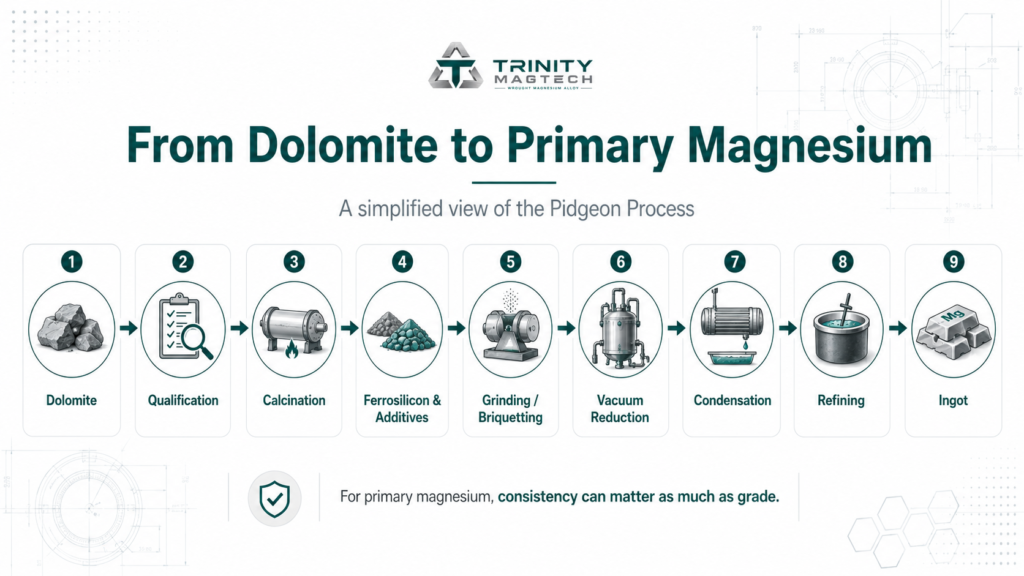
- Dolomite
- Qualify the dolomite for magnesium production
- Crush and calcine it to produce calcined dolomite
- Add ferrosilicon and process additives
- Grind and briquette the charge
- Vacuum reduction at high temperature
- Condense magnesium vapor into crude magnesium
- Refine the crude magnesium
- Cast primary magnesium ingots
One China-side primary magnesium project plan reviewed by Trinity describes a typical Pidgeon-route flow in similar terms:
- dolomite is crushed and calcined;
- the calcined material is mixed with ferrosilicon and a small amount of additive,
- ground and pressed into briquettes;
- the briquettes are charged into reduction retorts and heated under vacuum;
- magnesium vapor is condensed into crude magnesium, which is then refined and cast into ingots.
The same report also makes clear that the magnesium line depends on supporting systems for raw-material preparation, vacuum, refining, casting, environmental control, utilities and material handling.
Step 1: Start with the Dolomite, Not the Furnace
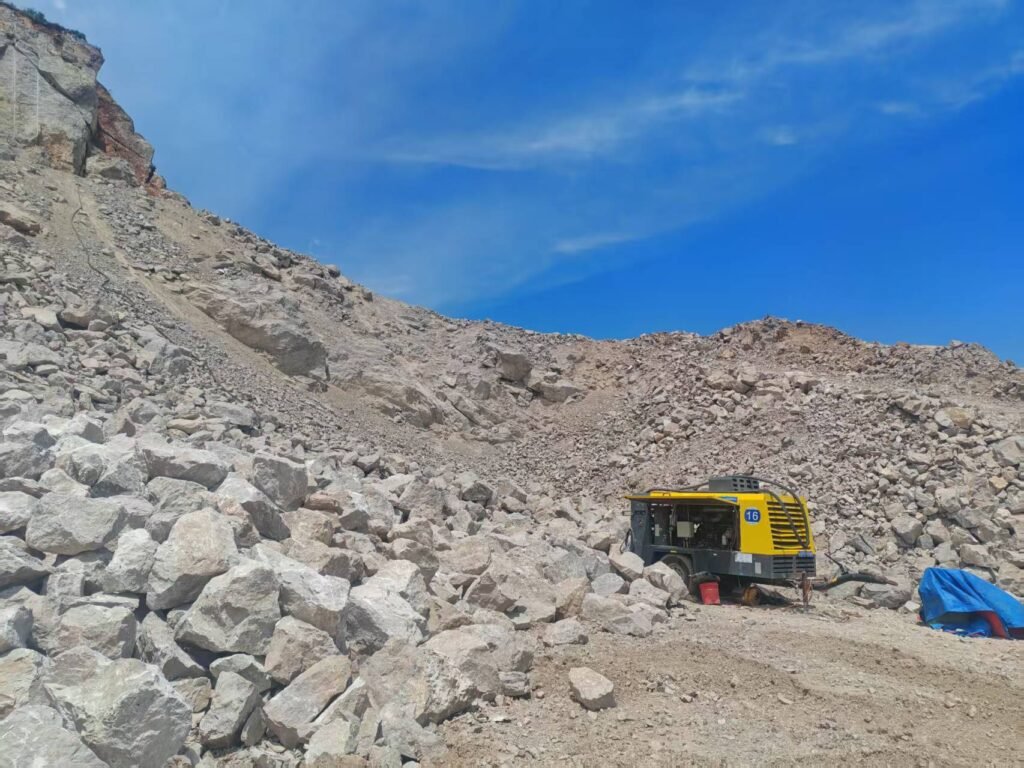
Dolomite mining area. Visual appearance alone is not enough to determine whether the material is suitable for stable primary magnesium production.
This is the first place where many early-stage projects can become misleading. Having a large dolomite resource does not automatically mean that you have a good magnesium feedstock.
One experienced magnesium producer we work with once screened more than 100 dolomite sources before identifying only a small number that could provide sufficiently consistent material for stable production.
The important lesson was not simply that one source showed better chemistry in a single assay than another. In real production, long-term consistency mattered just as much. A source that looks excellent in one sample but changes significantly from batch to batch can create more production trouble than a source with slightly lower but stable composition.
| For primary magnesium, consistency can matter as much as grade. |
That means a serious project should not stop at a single laboratory report or a headline resource number. It should ask how the deposit varies across mining areas, how representative the sampling is, how the material behaves after calcination, and whether the chemistry remains stable enough for continuous production.
Step 2: Calcine the Dolomite
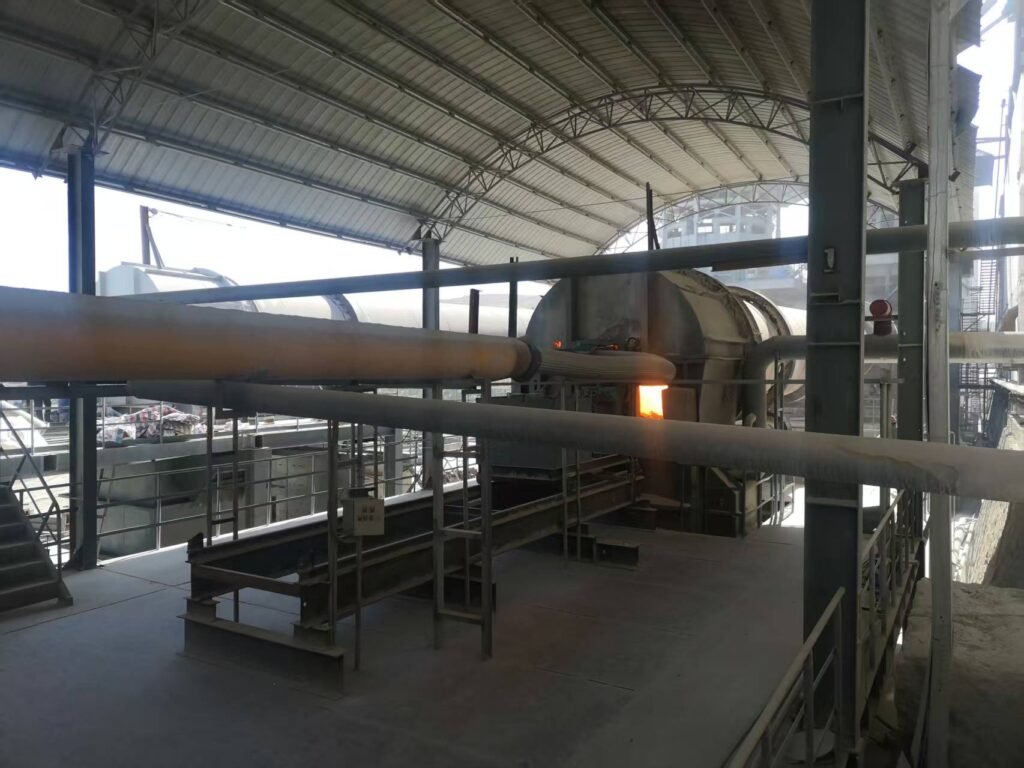
Rotary kiln used for dolomite calcination. Actual kiln design and operating conditions vary by project.
Raw dolomite is first crushed, screened and calcined. During calcination, the carbonate mineral is converted into reactive calcined dolomite, often called dolime, mainly consisting of reactive CaO and MgO, while carbon dioxide is released,for the downstream reduction process.
For a buyer, the important point is not the kiln name alone. Calcination quality affects what happens later. Raw-material particle size, temperature control, residence time, product activity, heat supply and consistency all matter. A project with strong mining resources but weak calcination control can still struggle downstream.
Step 3: Prepare the Reduction Charge
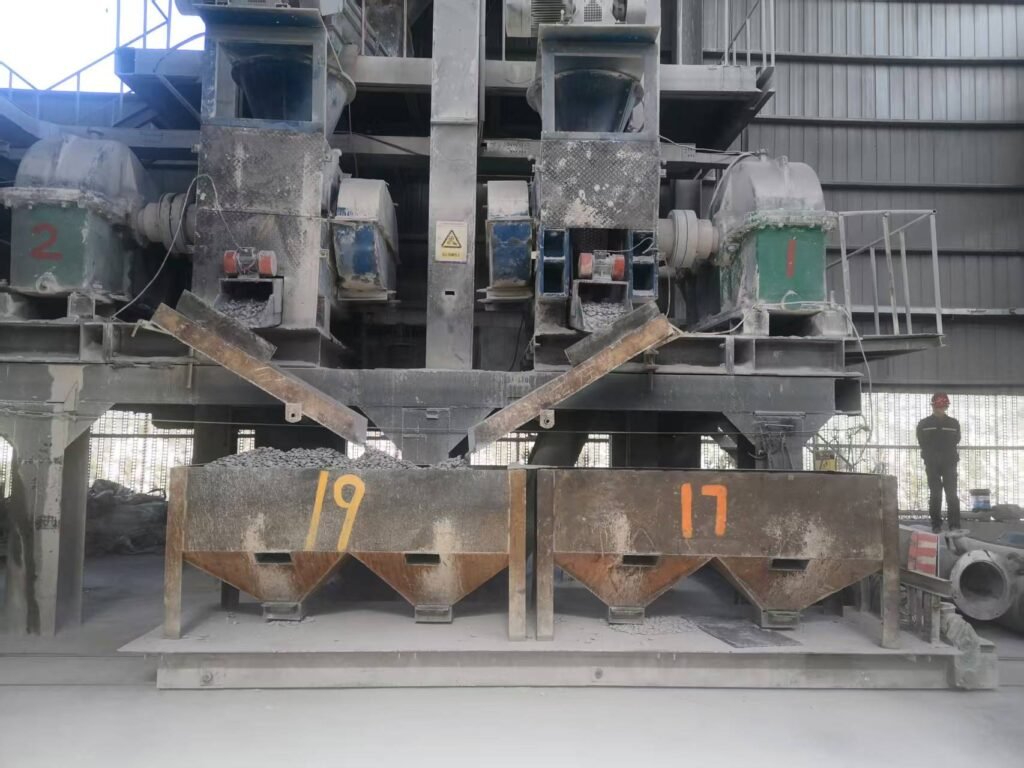
Briquetting section used to prepare the reduction charge.
The calcined dolomite is mixed with ferrosilicon, which acts as the reducing agent, together with a small amount of process additive or mineralizer, depending on the plant practice. The mixture is ground and pressed into briquettes so it can be charged into the reduction retorts.
This step is a good example of why a magnesium project is a supply-chain project as well as a metallurgy project. A plant needs not only dolomite, but also reliable long-term access to ferrosilicon, additives, briquetting capacity, refractory and retort materials, spare parts and maintenance support.
Step 4: Reduce Under Vacuum at High Temperature
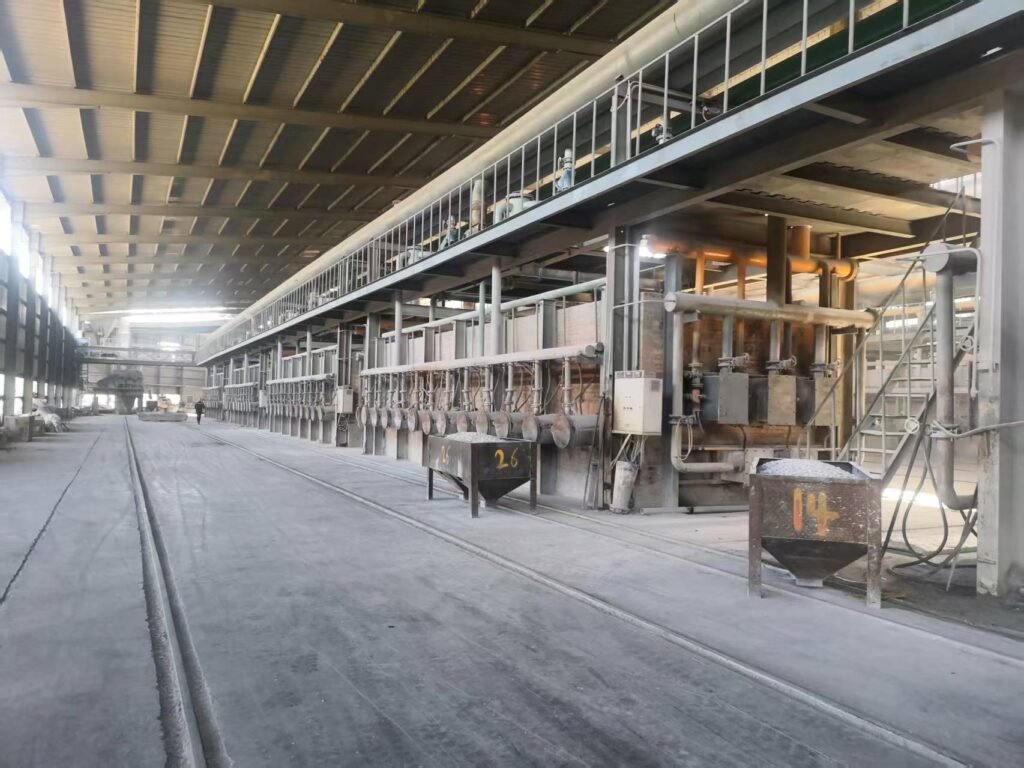
Horizontal retort furnace configuration used in primary magnesium production.
The briquettes are loaded into heat-resistant reduction retorts. Under high temperature and vacuum, the reduction reaction releases magnesium as vapor. Published descriptions of the conventional Pidgeon process commonly place the reduction stage around 1200°C under high vacuum, although actual operating temperature, vacuum level and cycle conditions vary with plant design and process practice.
These values should therefore be treated as general technical references rather than plant design specifications.
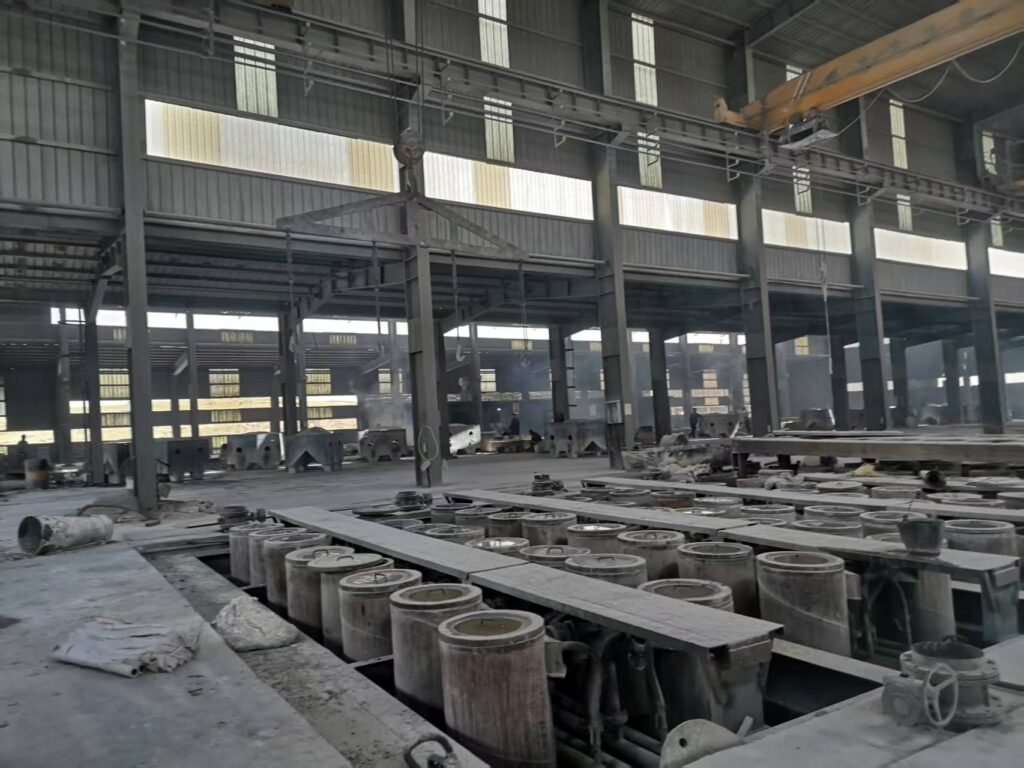
Vertical Retort Furnace
At this stage, plant economics begin to depend heavily on energy, furnace efficiency, retort life, vacuum reliability, operating discipline and cycle time. A process that is technically possible can still be commercially unattractive if local energy, maintenance or labor conditions are wrong.
Step 5: Condense, Refine and Cast
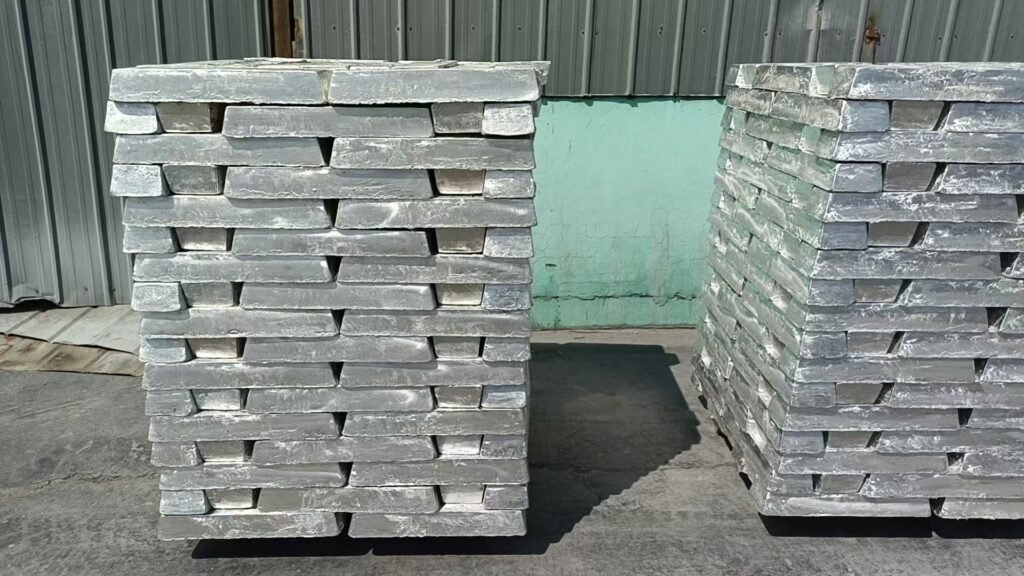
Primary Magnesium Ingots
Magnesium vapor from the reduction stage is condensed to form crude magnesium. The crude magnesium is then melted and refined to remove impurities before being cast into primary magnesium ingots that meet the required chemical specification.
This final step is also where upstream instability becomes visible. If raw materials, reduction conditions or refining practice are inconsistent, the final ingot chemistry and production yield can move outside the desired window. Stable production therefore depends on control across the whole chain, not only on the refining furnace at the end.
Before You Plan a Primary Magnesium Plant, Answer These Questions First
A buyer or investor does not need to become a metallurgist before starting a project. But before committing serious money, at least the following questions should have credible answers:
• What magnesium grade, product specification and consistency requirements will your target customers actually have?
• Who will buy the primary magnesium after the plant starts producing?
• Is your dolomite actually suitable for stable magnesium production?
• Is the ore chemistry only high in one sample, or is it consistently stable over time and across the deposit?
• Where will your energy come from, and can the local energy cost support the Pidgeon process?
• Can ferrosilicon and other process materials be supplied reliably over the long term?
• What equipment is required for calcination, reduction, refining and casting — and which parts need local service support?
• How will you handle environmental control, solid waste, electricity, water and other utilities?
• Where will the people come from who can commission, operate, troubleshoot and manage the plant — and how will the local team be trained?
• Can the Chinese production model really be transferred to your country, or do local resource, energy, labor, regulation and infrastructure conditions require a different route?
A Primary Magnesium Plant Is a System, Not a Piece of Equipment
This is perhaps the most important buyer-side conclusion. It is easy to start a project discussion by asking for a furnace quotation. But the furnace is only one node in a much larger system.
A commercial primary-magnesium project connects resource qualification, mining and sampling, calcination, ferrosilicon supply, briquetting, reduction, vacuum systems, condensation, refining, casting, environmental systems, utilities, equipment maintenance, experienced commissioning personnel, trained operators, laboratory and quality-control staff, production management, logistics and downstream customers.
China has decades of practical experience in this chain. That experience can be useful to overseas projects, but it should be used as a benchmark, not copied blindly. The right project starts with local resources and local economics.
What Should the First Decision Be?
If you are still at the idea stage, the first decision should probably not be “Which magnesium furnace should I buy?”
A better first question is:
| Do my raw material, energy, infrastructure, operating capability and market justify moving this project to the next stage? |
If the answer is not yet clear, a resource and project review is usually much cheaper than discovering the problem after equipment has been ordered.
At Trinity Magtech, our China-side magnesium project work starts with questions like these — not only how a process works, but what needs to be understood before an idea can move toward commercial production.
Depending on the project stage, this may involve connecting buyers with experienced technical specialists, engineering organizations, equipment resources, manufacturing expertise, engineering organizations, equipment resources, manufacturing expertise and plant-operation expertise in China.
If you are evaluating a primary magnesium project and want to compare your local resources, energy, infrastructure and operating conditions with practical China-side experience, we would be happy to discuss the project.
Technical Note
This article is intended as a buyer-oriented overview rather than a plant design specification. Actual process conditions, equipment selection and plant configuration should be determined through project-specific raw-material testing, engineering and technical evaluation.
About the Author
Harry Guo
Harry Guo has more than 20 years of international business experience.At Trinity Magtech, he focuses on helping global buyers understand, develop and source magnesium projects in China, from materials and manufacturing to project commercialization.